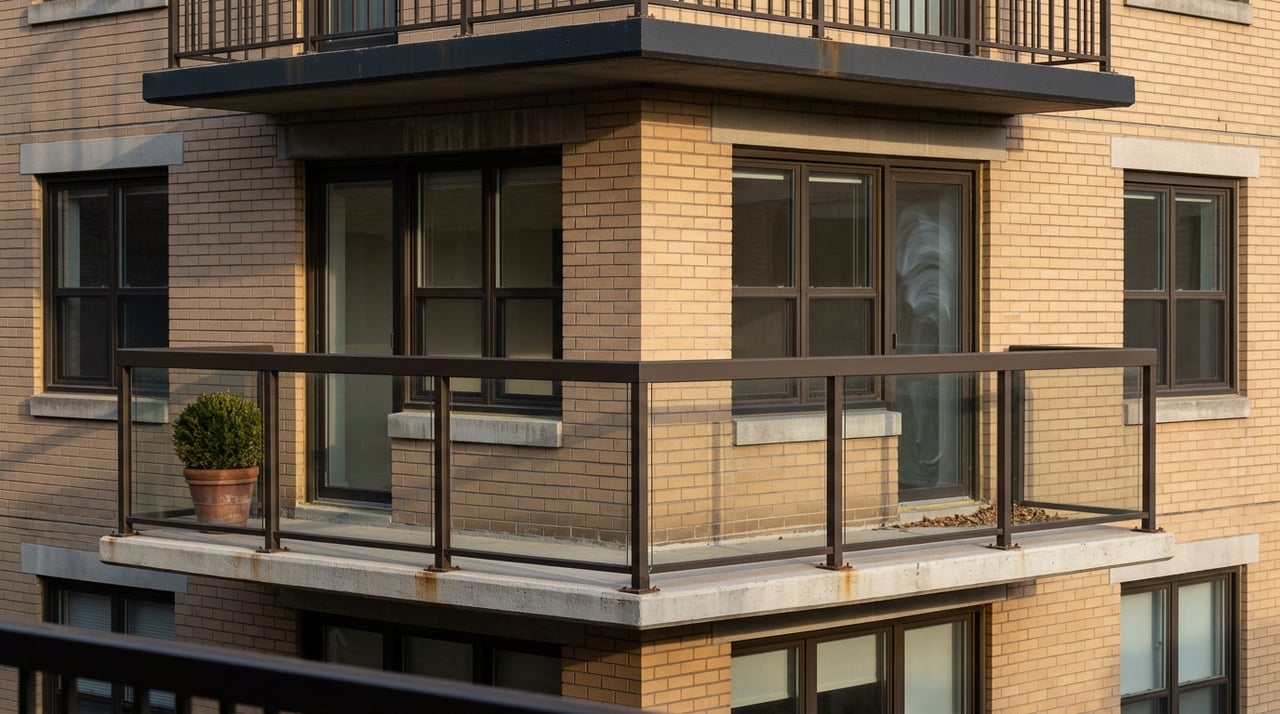
Selma Dedic bought into a building with balconies that looked fine. Then an engineer climbed onto them, found corrosion and structural damage across the railings, and determined that 56 of the building's 90 balconies could not hold the 200-pound load Chicago's building code requires. The board adopted a $1.01 million special assessment to fix it. Dedic argued the board needed an owner vote first. An Illinois appellate court disagreed earlier this year, ruling that a safety hazard of that kind counts as an emergency under state law, which means the board never had to ask.
That ruling is worth sitting with if you're comparing Chicago condos right now, because it points to a gap in how this market actually works that most listing sheets and HOA disclosures never surface.
The gap: Illinois never made anyone prove the number
Every condo board in Illinois has to budget "reasonable reserves for capital expenditures and deferred maintenance" under the Illinois Condominium Property Act. That sounds like a safeguard. It isn't one, because the law never defines what reasonable means and never requires anyone to check the board's math against reality.
Compare that to states like California, Nevada, and Washington, where associations are legally required to commission a professional reserve study, an engineer's inventory of the roof, elevators, facade, and mechanical systems paired with a funding plan for replacing them on schedule. Illinois has come close to adopting something similar twice. A bill passed the Illinois House as HB 220, then reappeared as HB 2563 and its Senate companion SB 1703, which would have required a reserve study every five years for associations with significant shared infrastructure and made that study available to any prospective buyer on request. Both versions stalled in the Rules Committee. As of this writing, no version of the mandate is law.
What this means in practice: a board can go years without ever commissioning the kind of independent, professional look at a building's actual physical condition that other states require by statute. The dues can look completely reasonable on the budget you're handed during attorney review, because nothing in Illinois law forces anyone to compare that number to what the roof, elevators, or facade will actually cost when they fail.
What the law does require, and why it's not the same thing
The Illinois Condominium Property Act does require one thing here: the annual budget has to state the association's current reserve balance and disclose whether that reserve is funded according to a plan based on a reserve study. If no study exists, the board has to say so in the budget disclosure.
Read that again, because it's the whole mechanism. Illinois requires the board to disclose the absence of a study. It does not require the board to get one. A building can meet every letter of Illinois disclosure law while telling you, in writing, that nobody has independently verified whether its reserves match its actual capital needs. That disclosure is legal compliance, not financial health, and the two get conflated constantly during a walkthrough.
The 115 percent rule sounds like protection until you read the exception
Illinois law does give unit owners one real check on runaway assessments. If a board adopts a budget or special assessment that pushes total assessments for the year above 115 percent of what was charged the year before, owners holding 20 percent of the votes can petition within 14 days of the board's action to force a membership vote on it. On paper, that's a meaningful brake on boards that overreach.
Here's the carve-out the Dedic case put on display: that protection does not apply to assessments tied to an emergency or a legally mandated repair. And Illinois courts have read "emergency" broadly. It doesn't require imminent structural collapse. A documented risk to occupant safety, like a balcony railing that can't hold the code-required load, is enough to qualify. Once a facade or structural report finds that kind of problem, the board can move straight to a special assessment with no vote required at all, regardless of the dollar amount.
That's the collision point. Chicago's Facade Ordinance already requires periodic professional condition assessments and critical examinations for buildings 80 feet and taller, with repairs due once a report flags a problem. Illinois law doesn't require the underlying reserve study that would have caught the deterioration years earlier, but it does let a facade exam trigger an assessment large enough to bypass the one owner protection the law provides. Low dues for years, then one inspection report closes the gap all at once.
What actually drives the bill depends on what kind of building you're touring
The dollar math scales with your ownership share. If a building levies a $600,000 assessment for facade and balcony work and your unit carries a 1.25 percent ownership interest, your share is $7,500. That percentage is fixed in the building's declaration, so it's worth asking for before you get attached to a unit, not after.
Where that bill is likely to originate tends to track building type:
| Building type | What tends to fail first | Why |
|---|---|---|
| Lakefront mid-rises (Edgewater and nearby lakefront blocks) | Exterior envelope and balconies | Direct exposure to wind-driven rain and lake-effect corrosion accelerates wear on facades and railings |
| Vintage walk-ups (Edgewater and similar older stock) | Masonry, tuckpointing, roofs, windows, heating systems | Older brick and boiler systems built well before modern reserve planning norms were common |
| Loop and downtown towers | Elevators | Full modernization runs on 25 to 30 year cycles and can cost hundreds of thousands of dollars per cab, a number few reserve funds carry without a dedicated line item |
None of this means any one of these building types is a bad buy. It means the question you ask during a showing should change depending on which one you're standing in.
What to actually ask for before you waive anything
The documents that matter are the ones the law already requires the board to produce, you just have to ask for all of them and read past the summary page.
- The current budget and its reserve balance disclosure, including whether the board states that reserves follow a study or admits that none exists
- Board meeting minutes from the last 12 to 24 months, which often mention facade exams, engineering reports, or repair discussions well before any assessment is formally adopted
- The building's special assessment history, not just whether one is pending
- The unit's exact percentage of ownership interest, which determines your share of any future assessment
- Whether the building has filed a recent critical examination report under Chicago's Facade Ordinance, and what it found
If a board says no study exists and no facade exam is due for several years, that's not automatically a red flag. It's information. The problem is buying without asking, because the law doesn't force the seller to hand you a verified answer unprompted.
Why this matters more this year than last
The window to do this work is getting shorter. In June 2026, the City of Chicago logged 2,417 closed sales of single-family homes, townhomes, and condominiums, while single-family prices in the city ran about 11 percent higher than the same month in 2025 and for-sale inventory fell roughly 31 percent year over year. Days on market actually dropped compared to last June. That's a market where buyers are moving faster and feeling more pressure to shorten or waive contingency periods to win a unit, which is exactly the window where condo document review happens. A faster market doesn't make the reserve gap disappear. It just gives buyers less time to notice it before they're contractually committed.
A few questions worth asking directly
Does Illinois require condo sellers to disclose past special assessments? Illinois requires the board's annual budget to disclose the current reserve balance and whether it's funded according to a reserve study, or to state plainly that no study exists. It doesn't require an independent audit of whether that balance is actually adequate for what the building will need.
Can a Chicago condo board impose a special assessment without a vote? Yes. Boards can adopt special assessments without owner approval. If the total assessments for the year exceed 115 percent of the prior year's total, owners holding 20 percent of the vote can petition for a membership vote within 14 days of the board's action, but that right doesn't apply when the assessment addresses an emergency or a legally mandated repair.
Is Illinois going to require reserve studies like other states eventually? Legislation that would require a reserve study every five years for associations with significant shared infrastructure has passed the Illinois House once, in HB 220, and reappeared as HB 2563 and SB 1703. Both stalled in the Rules Committee. Nothing requires it as of this writing.
Chicago condos aren't a bad bet because of any of this. They're a market where the paperwork tells you less than it looks like it does, and where the buildings that reward patience are the ones where someone actually reads the minutes before making an offer. If you're weighing a specific building against what you'd get for the same money elsewhere in the city or the southwest suburbs, Sullivan Property Group can walk through the association documents with you line by line before you're locked into anything. Schedule a Consultation and bring the HOA packet.