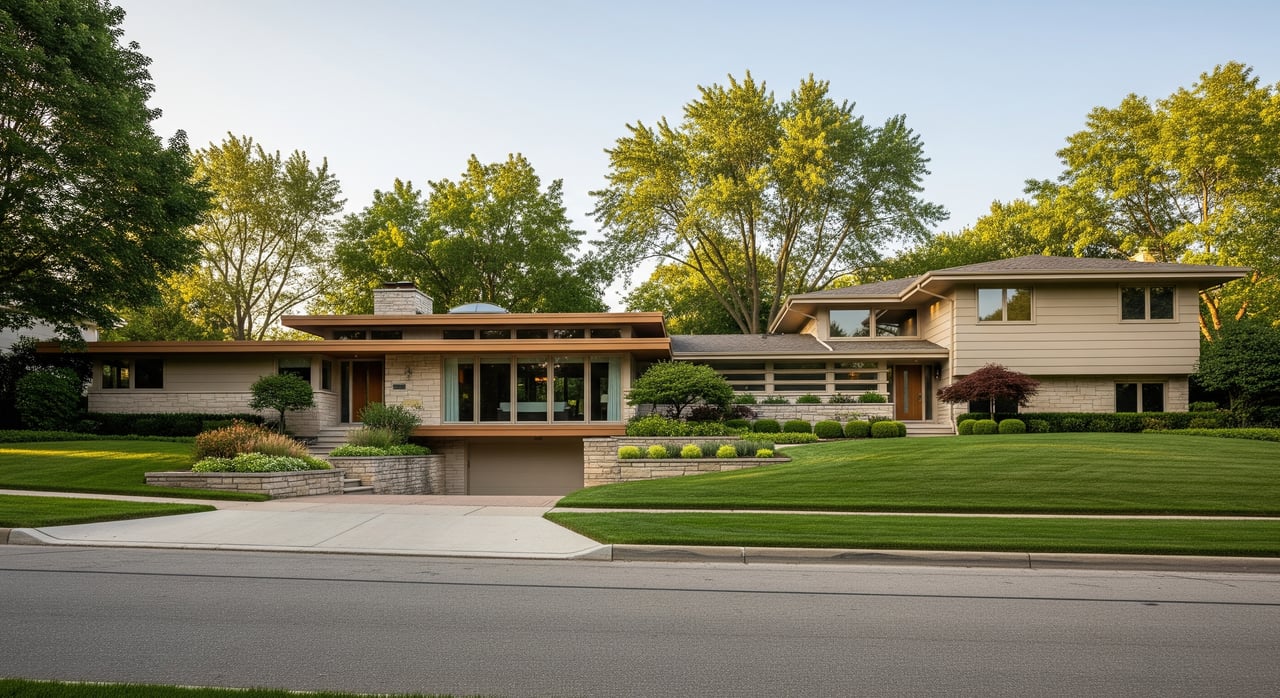
Choosing between a ranch and a split-level home in Lemont can shape your daily life, renovation plans, and long-term comfort. If you want easy, single-level living or you like the idea of separate zones for sleep and play, your choice matters. In this guide, you’ll learn how each style works in Lemont, what to expect from mid-century construction, and how to plan smart upgrades that add value. Let’s dive in.
Lemont housing snapshot
Lemont grew steadily after World War II, which means you’ll see many homes from the 1950s to the 1970s. That era popularized ranch and split-level layouts across the Chicago metro. Local topography also plays a role. Flatter lots often feature ranches, while areas with more grade change may lean split-level to work with the slope.
You’ll find original features and systems in many of these homes. Expect closed kitchens, paneled family rooms, and built-ins, along with mid-century electrical panels, older mechanicals, and single-pane windows in some properties. These homes can be great candidates for thoughtful updates.
Ranch vs split-level: layout and flow
Ranch homes
- Single-story living with the kitchen, bedrooms, and main living spaces on one level.
- Often a rectangular or rambling footprint with an attached garage on the same level.
- Basements are usually separate and may be unfinished or partially finished.
- Strengths: simple circulation and easier expansion along the main footprint.
Split-level homes
- Staggered floors with short stairs up to bedrooms and down to a lower family or rec room. Bi-level and tri-level variations are common.
- Designed to provide more living area on a smaller footprint and to adapt to sloped sites.
- Strengths: separation of public and private spaces and efficient use of lot size.
Day-to-day, ranches offer straightforward movement and less stair use. Split-levels create distinct zones, which can be helpful for noise control and entertaining, but they do require more stair navigation.
Accessibility and aging in place
If you want long-term accessibility, ranches make single-floor living easier. Wider doorways, lever handles, grab bars, and even a zero-step entry are simpler to add when everything is on one level. Split-levels are trickier because daily circulation depends on short flights of stairs. Converting a split-level for accessibility may mean moving a bedroom and bath to the main level, adding a lift, or building an addition.
Renovation potential in Lemont homes
Open floor plans
- Ranch: Removing non-load-bearing walls can open the kitchen to the living area. If a wall is load-bearing, plan for a structural beam and a permit.
- Split-level: Open planning is possible but often limited by stair locations and shorter floor-to-floor heights. Structural changes should be reviewed by an engineer or architect.
Lower-level living
- Split-level: Lower levels are often integrated into the living space already. You may have walkout potential depending on grade.
- Ranch: Basements vary widely. To add a legal bedroom, check ceiling height and plan for an egress window or door, proper HVAC, and moisture control.
Systems and energy upgrades
Across both styles, mid-century homes often benefit from new HVAC, improved attic insulation, and window upgrades. These projects can improve comfort and reduce operating costs over time.
What to watch for in mid-century homes
Electrical and plumbing
Older panels in the 60–100 amp range may need updating, and very old wiring types can require replacement. Plumbing in mid-century homes often includes copper, but older sections could still have galvanized lines. Ask about service upgrades and recent repairs.
Windows, insulation, and moisture
Single-pane windows and minimal insulation are common in older homes. Window replacement and added insulation can boost efficiency. In the Chicago region, freeze-thaw cycles and expansive soils can stress foundations. Look for proper grading, gutters, and signs of moisture like efflorescence or musty odors.
Lead and asbestos safety
Homes built before 1978 may have lead-based paint. Asbestos can be found in some older floor tiles, pipe insulation, or siding. If you plan renovations, consider testing and proper abatement before you start any major work.
Permits and zoning in Lemont
Structural changes, additions, major mechanical or plumbing work, and finishing a basement typically require permits through the Village of Lemont or the relevant Cook County authority. Electrical and plumbing usually need separate permits and licensed contractors. If you’re considering a separate lower-level dwelling, confirm zoning, as many municipalities restrict separate units. Always check the permit history for past renovations to avoid financing issues or surprises at resale.
Cost, timeline, and value add
Every project is unique, but here is a general sense of scope and impact:
Quick wins
- Fresh paint, flooring updates, light fixture swaps, and minor bath refreshes.
- Small accessibility tweaks like grab bars and lever handles.
Moderate updates
- New HVAC or water heater, window replacements, and moderate kitchen remodels.
- Finishing a portion of a basement without structural changes.
Bigger projects
- Removing load-bearing walls, full kitchen remodels, and complete basement finishes with new bedrooms and baths.
- Additions, main suite relocations, or installing a lift or residential elevator in a split-level.
What buyers value most
- Updated kitchens and primary baths with modern layouts.
- A main-level primary suite for single-floor living, which is often easier to achieve in a ranch.
- Finished lower levels with proper egress and HVAC.
- Energy efficiency updates like newer HVAC, insulation, and windows.
Financing upgrades
If you plan to renovate after purchase, consider renovation mortgages, such as FHA 203(k) or Fannie Mae HomeStyle, as well as home equity loans or lines of credit. Lender requirements vary, but permits, contractor credentials, and timelines often matter. Compare local comps to understand which upgrades are rewarded in your price band.
How to choose: a quick decision guide
- You want minimal stairs and easy access: consider a ranch.
- You like distinct living zones and efficient lot use: consider a split-level.
- You plan to open the kitchen: ranches are often simpler, but both need structural review.
- You want walkout potential or a big family room: split-levels often deliver this on the lower level.
- You want a main-level primary suite: easier to add in a ranch.
- You plan a full lower-level finish: check ceiling heights, egress, and moisture control in both.
Next steps
Both ranch and split-level homes can shine in Lemont with the right plan. Focus on layout fit, realistic renovation scope, and permit-ready improvements that add comfort and value. If you want help comparing homes, weighing upgrade options, or reviewing permit history, connect with a local expert who knows the housing era and the terrain.
Ready to find the right Lemont fit and map out smart improvements? Connect with Tim Sullivan for a focused consultation and a clear plan from search to closing.
FAQs
What is the main difference between a ranch and a split-level in Lemont?
- A ranch places most living spaces on one level, while a split-level staggers spaces across short flights of stairs for more separation and efficient lot use.
Are ranch homes better for aging in place in the Chicago suburbs?
- Yes, ranches usually work better for single-floor living and universal-design upgrades, while split-levels often require costlier modifications.
What renovations add the most value to mid-century homes in Lemont?
- Updated kitchens and primary baths, main-level suites in ranches, finished lower levels with egress, and energy efficiency upgrades typically attract buyers.
Do I need a permit to finish a basement in Lemont?
- Finishing a basement generally requires permits, and bedrooms need proper egress along with code-compliant HVAC, electrical, and plumbing.
What should I look for during inspections of older ranch or split-level homes?
- Review electrical capacity, plumbing type, roof and drainage, moisture signs, insulation levels, and potential lead paint or asbestos if the home predates 1978.
Can I create an accessory unit in a split-level’s lower level?
- Zoning rules vary and many municipalities restrict separate dwelling units, so you should verify what is allowed before planning a separate unit.